


X.com
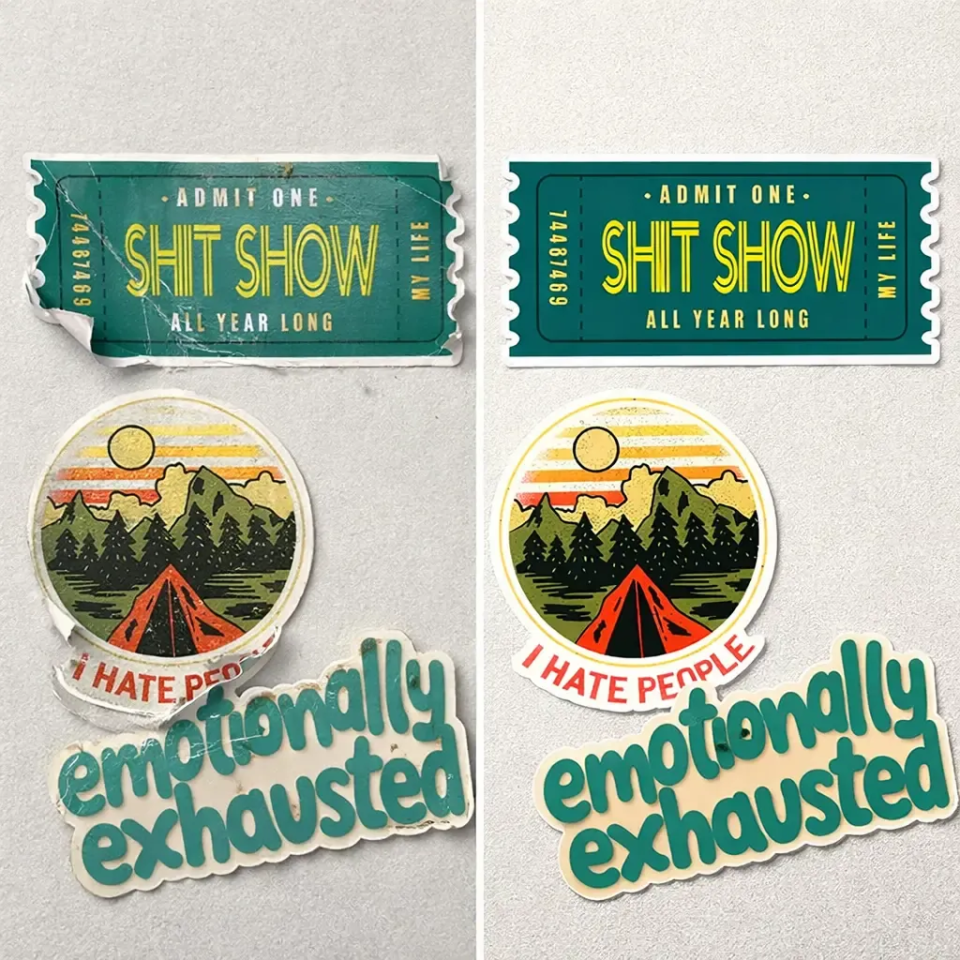
You found a pack of 50 stickers for $5 on some marketplace site and thought you scored a deal. Two weeks later, the corners are peeling, the colors have faded, and one went through the dishwasher and completely disintegrated. Now you’re annoyed and looking for high-quality stickers that will actually last.
This cycle happens constantly. People buy cheap stickers thinking they’re saving money, only to replace them multiple times and end up spending more than if they’d bought quality stickers from the start.
Let’s break down exactly why cheap stickers fail so spectacularly and what you should actually look for when buying stickers that will last.
The Paper Sticker Problem
The cheapest stickers are made from paper, not vinyl. Paper seems fine initially, but it’s fundamentally not designed for the wear and tear that stickers endure.
Paper stickers absorb moisture. When water touches them, they swell, warp, and start breaking down. That single trip through the dishwasher destroys them completely. Even humidity in the air gradually degrades paper stickers over time.
Paper also tears easily. When you try to peel and reposition a paper sticker, it rips. The edges fray and lift. Any scraping or friction damages the surface. Within weeks, paper stickers start looking ratty and worn.
Quality stickers use vinyl material specifically engineered to withstand water, UV exposure, temperature changes, and physical wear. Vinyl stays intact, keeps its shape, and maintains appearance far longer than paper ever could.
The material cost difference between paper and vinyl explains the price gap. Paper is dirt cheap. Quality vinyl costs more to produce, but longevity makes it worth the investment.
Adhesive Quality Makes or Breaks Longevity
Cheap stickers use weak adhesives that either don’t stick properly or, paradoxically, stick too aggressively and leave residue when removed.
Poor adhesive means stickers peel at the corners within days. They fall off in hot weather or come loose in cold conditions. They refuse to stick to slightly textured surfaces. The sticker keeps lifting, collecting dust underneath, until eventually it just falls off completely.
Alternatively, some cheap stickers use overly aggressive adhesive that bonds too strongly. When you try to remove them, they leave sticky residue that’s nearly impossible to clean. You’re stuck scraping glue off your laptop or water bottle long after the sticker is gone.
Quality stickers use adhesive design specifically for long-term bonding that can also be removed cleanly when needed. The sticker stays put through normal use but comes off without residue if you decide to remove it later.
This balance requires better adhesive chemistry, which costs more but provides significantly better user experience.
Color and Print Quality Deterioration
Walk past any car that’s been sitting in the sun for a few years with cheap bumper stickers. Notice how faded they look? That’s what happens when inferior inks and coatings are used.
Cheap stickers use inks that aren’t UV-resistant. Sunlight breaks down the color molecules, causing rapid fading. What was once bold and colorful became washed out and barely visible within months.
The printing process also matters. Low-quality printing produces blurry edges, visible pixelation, and inconsistent color saturation. The design never looked crisp to begin with, and degradation makes it worse.
Quality stickers use UV-resistant inks designed for outdoor durability. Even with constant sun exposure, colors stay true for years. The printing process produces sharp, clear designs with accurate colors that match what you saw online.
Better coatings protect the printed surface from scratching, moisture, and UV damage. This protective layer keeps cheap stickers lack, leading to accelerated wear.
The Coating and Finish Problem
Cheap stickers often skip protective coatings entirely or use minimal protection that doesn’t actually work.
Without proper coating, the printed surface is vulnerable to everything. Scratches damage the design. Moisture causes colors to run or fade. Oils from your hands create smudges and discoloration. The sticker starts looking dirty and damaged quickly.
Even when cheap stickers have coatings, they’re usually thin and low-quality. It wears through easily, providing little actual protection once you start using the item daily.
Quality stickers feature thick, durable coatings that act as shields for the design underneath. Glossy or matte finishes protect against scratches, moisture, UV rays, and general wear. The coating maintains the sticker’s appearance through years of use.
This protective layer is expensive to apply properly, but it’s what separates stickers that last years from ones that fail in weeks.
Size and Cutting Precision Issues
Cheap sticker manufacturing often means imprecise cutting. Die-cut stickers might have rough edges or inconsistent shapes. Kiss-cut stickers might be cut too deep or not deep enough.
Imprecise cutting creates weak points where peeling starts. Rough edges lift more easily than clean cuts. Designs that should match specific shapes end up slightly off, making them look cheap even when new.
Quality manufacturers use precise cutting equipment calibrated for clean edges and accurate shapes. The investment in better equipment and quality control produces stickers that look professional and professional craftsmanship shows in every detail.
What Quality Stickers Actually Cost
Here’s the reality. A good vinyl sticker from a reputable source typically costs $3 to $6 for individual stickers, or $2 to $4 each when buying small packs.
This seems expensive compared to $0.10 per sticker in those cheap bulk packs. But consider the replacement cycle.
Cheap stickers last maybe 2 to 3 months before looking terrible or falling off completely. Quality vinyl stickers last 3 to 5 years or longer with proper care. Over that timeframe, you’d need to replace cheap stickers 12 to 20 times to cover the same period one quality sticker lasts.
Replacing a $0.10 sticker even just 12 times costs $1.20. The $4 quality sticker that lasts five years is actually cheaper long-term, plus you avoid the frustration of constant replacement.
How to Identify Quality Stickers Before Buying
When shopping for stickers, look for these indicators of quality:
Material specification: The listing should clearly state “vinyl” material. If it just says “sticker material” or doesn’t specify, it’s probably cheap paper.
Waterproof claims: Quality vinyl stickers can legitimately claim waterproof properties. If this isn’t mentioned, assume they won’t survive moisture.
UV-resistant or fade-resistant mentions: Good manufacturers test for and advertise UV resistance because it’s a selling point. Absence of this claim is a red flag.
Thickness details: Better stickers mention mil thickness (usually 3 to 4 mil vinyl). Cheap stickers avoid discussing thickness.
Reviews mentioning longevity: Check reviews specifically for comments about how long stickers lasted. If multiple reviews mention quick failure, stay away.
Price reality check: Extremely cheap prices indicate extremely cheap materials. You truly get what you pay for with stickers.
Seller reputation: Established sellers with lots of positive reviews and clear return policies are safer bets than unknown sellers offering deals that seem too good to be true.
The Environmental Impact Factor
Cheap stickers that fail quickly contribute to waste. You throw them away and buy more, creating an ongoing cycle of consumption and disposal.
Quality stickers that last year reduced overall waste. You buy less frequently, throw away less, and ultimately consume fewer resources over time.
Some quality sticker makers also use eco-friendly materials and production processes. While not all do, the option exists at the quality end of the market and essentially never exists for cheap mass-produced stickers.
If environmental impact matters to you, investing in quality stickers that last supports more sustainable consumption patterns.
When Cheap Stickers Might Be Acceptable
There are limited situations where cheap stickers might be appropriate. Temporary uses like event decorations, single-day activities, or situations where you know the sticker won’t be kept long could justify cheaper options.
Kids’ sticker books or crafts where longevity isn’t expected are another acceptable use case for cheap stickers. If the sticker’s purpose is immediate use and disposal, spending more doesn’t make sense.
But for any application where you want the sticker to last, look good over time, and actually stay stuck to your belongings, cheap stickers are false economy.
Conclusion
Cheap stickers fail because they use inferior materials, weak adhesives, poor inks, and lack protective coatings. This isn’t mysterious. It’s predictable based on the materials and processes used in production.
Quality stickers cost more because they’re made with better materials designed for durability. Vinyl, strong adhesives, UV-resistant inks, and protective coatings all add to production costs but deliver dramatically better performance.
The choice between cheap and quality stickers isn’t just about price. It’s about whether you want to deal with constant replacement and frustration or invest once in stickers that actually work as intended for years.
Now you know what to look for. Make informed choices, buy quality, and enjoy stickers that look as good in three years as they did the day you stuck them on.


How Your Stickered Water Bottle Became Your Most Powerful Manifestation Tool
Your water bottle goes everywhere with...

7 Ways to Boost Your Holiday Branding with Stickers
The holiday season is basically the...

The Complete Guide to Choosing Zodiac Stickers Based on Your Moon Sign
You probably know your sun sign....