

X.com
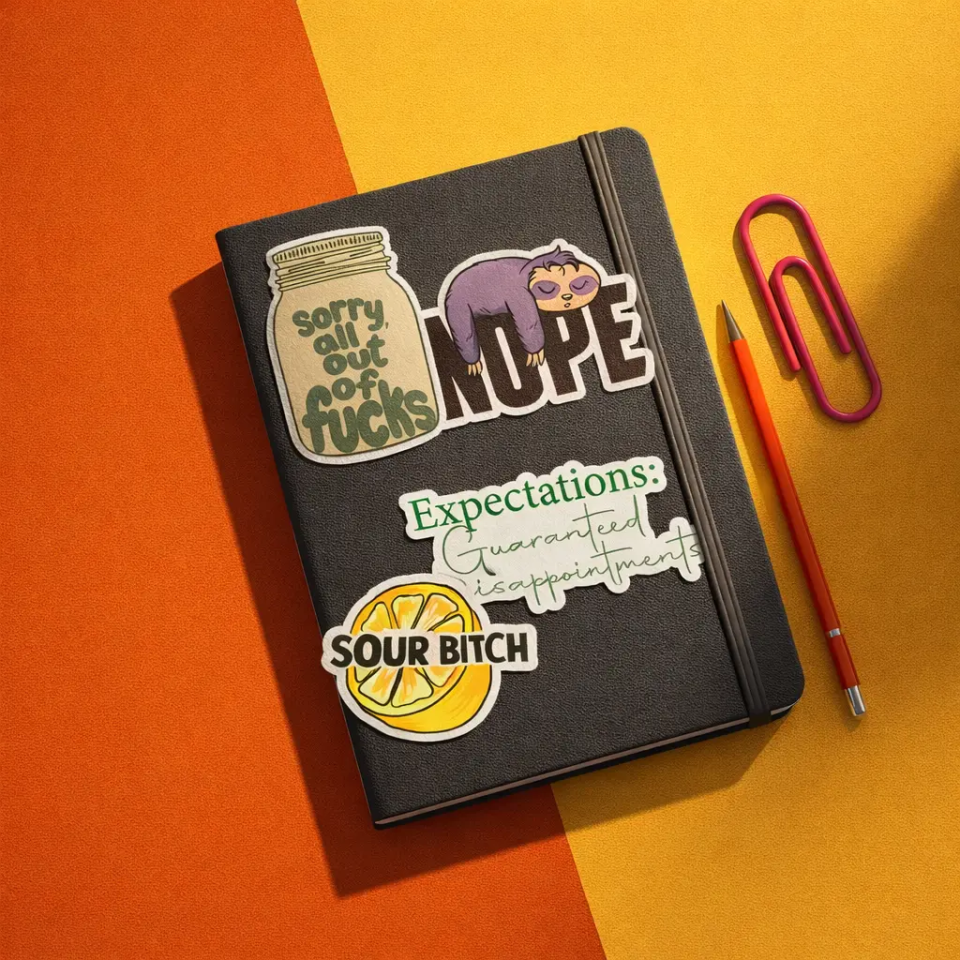
Before you launch a website, start a social media presence, or invest in business cards, you might stick a carefully chosen sticker on your laptop. It seems small, almost insignificant. But that single vinyl sticker is often the first step in a much bigger journey of self-branding.
Stickers are how most Gen Z and millennials start developing their personal brand, often without even realizing they’re doing it. Every sticker you choose, where you place it, and how you arrange it with others creates a visual story about who you are and what you stand for.
Let’s dive into how stickers became the first step in creative self-branding and why this small, affordable expression often leads to something much bigger.
What is Self-Branding Anyway?
Self-branding is the practice of marketing yourself as a brand. It’s how you present your identity, values, interests, and personality to the world in a consistent, intentional way.
For previous generations, personal branding was mostly limited to professionals and public figures. You needed business cards, headshots, maybe a website. It was formal, expensive, and primarily work-related.
For Gen Z and millennials, self-branding is universal and starts young. Your Instagram aesthetic is a brand. Your TikTok content strategy is a brand. Even your group chat personality is a micro-brand within your social circle.
And often, that branding journey begins with something as simple as choosing which stickers to put on your water bottle or laptop. You’re making decisions about what to broadcast about yourself before you ever think about creating content or building an online presence.
You Might Like: How Your Stickered Water Bottle Became Your Most Powerful Manifestation Tool
Why Stickers Work as a First Step
Stickers offer the perfect entry point to personal branding for several reasons that make them uniquely suited to helping people find and express their identity.
Low stakes experimentation: A sticker costs $3 to $5. If you decide it doesn’t represent you anymore, you can remove it or cover it. Compare that to getting a tattoo, buying an expensive piece of clothing, or committing to a specific aesthetic across your entire social media presence.
This low-risk environment lets you try on different identities, interests, and visual styles without major consequences. You can test whether declaring yourself a plant parent or a tarot reader or a certain music fan feels right before committing to those aspects of your brand more permanently.
Immediate visual impact: Unlike building a brand through content creation or developing skills, stickers give you instant results. You buy it, stick it, and boom, your brand now includes that element. There’s no learning curve, no practice required, no perfectionism barrier.
For people who feel overwhelmed by bigger branding projects, stickers provide quick wins that build confidence in making visual and identity choices.
Curated collection over time: Your sticker collection develops organically as you discover new interests, change perspectives, and evolve as a person. This mirrors how real personal brands develop through genuine growth rather than forced, inauthentic positioning.
You’re not creating a perfect brand from scratch. You’re building it piece by piece, sticker by sticker, as you figure out who you are and what you want to communicate.
Portable and public: Stickers on items you carry around become part of your real-world presence. People see your stickered laptop in coffee shops, your decorated water bottle at the gym, your customized phone case on the bus.
This public visibility makes stickers a bridge between private identity exploration and public self-presentation. You’re not just deciding who you are in private. You’re declaring it to anyone who sees your belongings.
The Psychology of Sticker Selection
Choosing stickers involves the same decision-making process you’ll use for bigger branding choices later. You’re just practicing in a safer, smaller format.
Values alignment: When you pick a sticker with an activist message or cause, you’re practicing declaring your values publicly. This translates directly into bigger brand decisions like which companies to support, what content to create, or which movements to speak about.
Aesthetic consistency: Deciding whether to go all pastel, all dark academia, all chaotic maximalist, or a mix requires thinking about visual cohesion. These are the exact same considerations that go into building a consistent social media aesthetic or visual brand identity.
Audience awareness: You think about who will see your stickers and what they’ll think. Will your family understand this reference? Will your classmates judge this choice? Will strangers at the coffee shop connect this message?
This is audience consideration, a fundamental branding skill. You’re learning to balance authentic self-expression with awareness of perception.
Identity prioritization: You can only fit so many stickers on a laptop before it looks cluttered. This forces you to prioritize which parts of your identity are most important to display. Are you a gamer first or an artist first? Do you lead with your humor or your spirituality?
These prioritization decisions become important when building larger personal brands where you need a clear, memorable identity rather than trying to represent every single thing about yourself.
From Stickers to Content Creation
Most young content creators went through a sticker phase before ever posting their first video or photo online. The skills and confidence built through sticker curation directly translate into digital content creation.
Visual composition skills: Arranging stickers on a laptop teaches spatial awareness, balance, and visual flow. These are the same skills needed for composing Instagram photos, designing TikTok thumbnails, or creating YouTube channel art.
You learn what looks cluttered versus intentional, how to create focal points, and how to use color and contrast effectively.
Niche identification: Your sticker collection often reveals your niche before you consciously identify it. All tarot and mystical stickers? That’s your niche. Mostly activism and social justice? That’s your lane. Heavy on a specific fandom? That’s your community.
Content creators need niches to build audiences. Stickers help you discover yours organically through what you’re naturally drawn to rather than forcing yourself into a box.
Consistency practice: Maintaining an aesthetic across multiple items with different stickers teaches you about consistency with variation. All your items look cohesively “you” while still having individual character.
This skill translates directly to social media where successful personal brands maintain consistent vibes across posts while keeping content varied and interesting.
Confidence in public expression: Walking around with your stickered laptop or water bottle is practice for putting yourself out there creatively. You’re getting comfortable with people seeing and judging your choices.
This confidence makes the leap to posting content online feel less terrifying. You’ve already been “out there” with your sticker choices. Posting a photo or video is just a bigger version of the same public self-expression.
Also Read: The Ultimate Guide to Choosing the Right Material for Your Stickers
Stickers as Brand Testing Ground
Professional marketers test messaging, visuals, and positioning before rolling out full campaigns. Your sticker collection lets you do the same informal testing for your personal brand.
Message testing: That sarcastic humor sticker gets lots of comments and laughs. Humor might be part of your brand. The deep philosophical quote sticker that nobody mentions. Maybe that’s not actually core to how you want to present yourself.
Pay attention to which stickers generate reactions and conversations. That feedback informs you about your brand.
Visual identity exploration: Try different color palettes, illustration styles, and design aesthetics through stickers before committing to them in bigger ways. You might discover that minimalist line art represents you better than bold graphics, or that vintage aesthetics feel more authentic than modern clean designs.
Community signaling: Certain stickers signal membership in specific communities. Fandom stickers find fellow fans. Activism stickers connect you with like-minded people. Niche hobby stickers identify potential friends with shared interests.
Watching which communities respond to which stickers help you understand which groups feel like home and should be part of your brand identity.
Evolution documentation: Look at your laptop from freshman year versus now. The sticker changes document your evolution. This proves that brands aren’t static, they grow with you.
This removes pressure to get your brand perfect from day one. Just like your sticker collection evolved, your larger brand will too.
The Economic Accessibility Factor
Personal branding often feels restricted to people with money for nice cameras, websites, or professional photos. Stickers remove that economic barrier.
For $20, you can build a starter sticker collection that begins expressing your brand across your belongings. No expensive equipment, no subscription services, no ongoing costs.
This accessibility means that self-branding through stickers is available to students, young workers, and anyone who can’t invest hundreds of dollars in traditional branding tools.
The low cost also reduces perfectionism. When something is expensive, we agonize over getting it exactly right. When stickers are affordable, we feel free to experiment, make mistakes, and evolve.
Digital Presence Follows Physical Expression
Interestingly, many people develop their sticker aesthetic before their social media aesthetic. Physical self-branding precedes and often informs the digital.
You figure out your color story through sticker choices, then apply that palette to your Instagram. You discover you’re drawn to mystical imagery via stickers, then create content around spirituality. You realize certain humor styles resonate through sticker reactions, then develop that voice in your captions.
The tangible, physical nature of stickers makes them less intimidating than the permanent, searchable internet. You can change sticker collection privately. Social media feels more exposing and permanent, even though technically neither is truly permanent.
From Consumer to Creator
The journey often goes like this. You start collecting stickers from various artists and brands. You develop strong opinions about design quality, messaging, and what represents you well. Then you think, “I could design stickers that represent my exact aesthetic and message.”
Many small sticker businesses and creative careers start from this exact progression. The founder was a passionate collector who realized they wanted to create rather than just consume.
Even if you don’t start a sticker business, this consumer-to-creator thinking applies to all creative self-branding. You study what works, develop your taste, and eventually create your own content that reflects your refined understanding of visual communication and personal branding.
The Social Currency of Stickers
In friend groups, stickers become currency and conversation starters. Trading stickers, gifting stickers, or bonding over shared sticker aesthetics creates social connections.
This social aspect teaches important branding lessons about community building, giving value to others, and creating connection points. Your brand isn’t just about your broadcasting. It’s about creating spaces for interaction and shared experience.
People who master this with stickers often translate it beautifully into community building around their creative work later.
Building Identity Through Collection
Sticker collecting teaches you that identity is cumulative, not singular. You’re not just one thing. Your laptop might have a gaming sticker, self-love affirmation, a band logo, and an activism message all coexisting.
This multi-faceted approach to identity creation is more authentic than trying to fit yourself into one box. Personal brands that embrace complexity and multiple interests feel more real and relatable.
Stickers teach this lesson early and visually. You see proof that you can be both spiritual and sarcastic, both soft and strong, both deeply serious and playfully silly.
The Gateway to Bigger Creative Projects
Skills learned through sticker curation scale up to bigger projects. Visual thinking, audience awareness, consistent aesthetic development, and confidence in public expression all apply when you’re ready to:
Launch a YouTube channel or podcast with visual branding that reflects your identity. Create a website or portfolio that presents a cohesive personal brand. Develop social media presence across platforms with consistent but varied content. Build a creative business or side hustle with clear brand messaging. Position yourself professionally in ways that stand out while staying authentic.
The leap from stickers to these bigger projects feels more manageable because you’ve already practiced all the core skills in a low-stakes environment.
Authenticity as the Foundation
The best part about starting your self-branding journey with stickers is that it keeps you honest. You choose stickers you genuinely like, not what you think you should like or what an algorithm tells you to perform well.
This foundation of authenticity is rare and valuable. Many people start their branding journey by copying what works for others or chasing trends. By the time they realize their brand feels fake, they’ve invested heavily in an inauthentic identity.
Starting with stickers grounds you in real interests and genuine self-expression from the beginning. As you scale up to bigger branding efforts, you have that authentic foundation to build on.
Final Verdict
Stickers aren’t just cute decorations for your belongings. They’re the training ground where you develop every skill you need for creative self-branding.
From visual composition to audience awareness, from niche identification to authentic expression, from confidence building to community connection, stickers teach it all in an accessible, affordable, low-pressure format.
If you’re feeling overwhelmed by personal branding or don’t know where to start with expressing yourself creatively, begin with stickers. Choose designs that resonate. Arrange them thoughtfully. Pay attention to reactions. Let your collection evolve as you do.
That laptop covered in carefully chosen stickers isn’t just decorated. It’s your first personal brand project, whether you realize it or not. And those skills you’re building will serve you in every creative and professional endeavor that follows.
So go ahead. Pick that sticker. Stick it somewhere visible. You’re not just decorating. You’re building your brand, one small, perfect piece at a time.



The Complete Guide to Choosing Zodiac Stickers Based on Your Moon Sign
You probably know your sun sign....
Why Cheap Stickers Fail and What to Look for Instead
You found a pack of 50 stickers for $5...